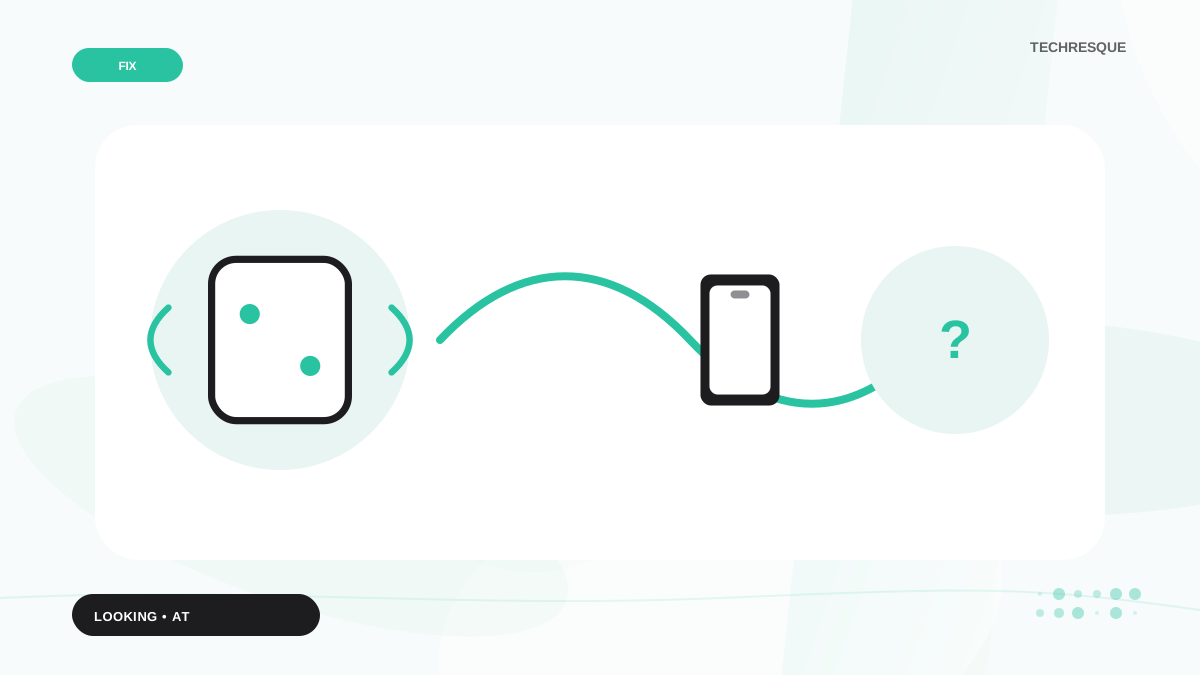
Looking down at a nearby screen can make some passengers feel sick because the eyes see a steady close-up image while the balance system senses the car turning, accelerating or braking. Reduce close-up screen use, look toward a stable distant view and stop if symptoms grow.
These suggestions are for passengers and stopped vehicles. Drivers should not interact with a phone while moving; motion discomfort is not diagnosed by a display setting.
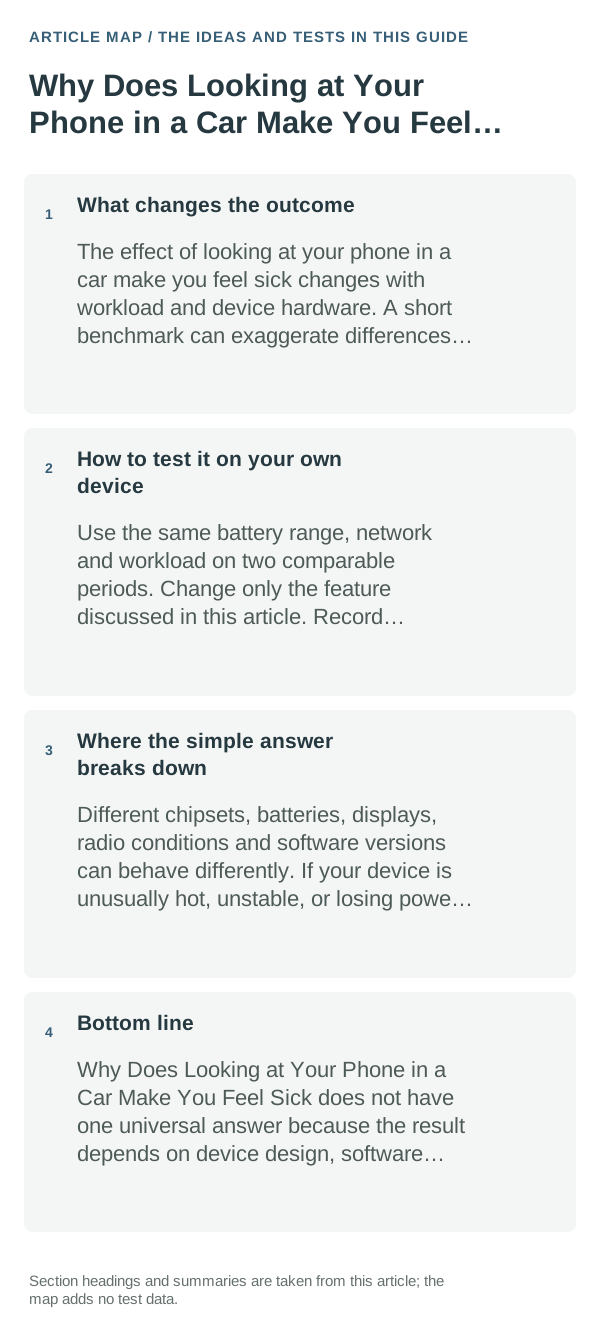
What changes the outcome
The conflicting visual and motion signals can contribute to nausea, dizziness or discomfort. Brightness, small text and prolonged reading can add eye strain, but the sensory mismatch is the key reason reading in a moving vehicle can feel worse than looking ahead.
What I would change first
- Change only the setting directly related to looking at your phone in a car make you feel sick and observe the result.
- Use the device normally for long enough to see a pattern, not a five-minute snapshot.
- Prefer the platform’s built-in controls over third-party “optimizer” apps.
- Restore the original setting if the change makes the device less useful without a measurable benefit.
How to test it on your own device
As a passenger on a short trip, compare audio-only use with brief screen glances while facing forward. Stop the screen activity if discomfort increases; do not keep testing through nausea.
Where the simple answer breaks down
People differ in motion sensitivity and other factors can cause similar symptoms. This guide is not a diagnosis; seek medical advice for severe, persistent or unexpected symptoms.
Bottom line
The safest first step is less close-up screen time and more attention to a stable distant view. Motion cues may help some passengers, but they are optional comfort aids, not a cure or a reason for drivers to use a phone.
Use a controlled test instead of changing several settings at once
As a passenger, compare audio-only directions with a brief screen glance while looking toward a stable distant view; stop if symptoms increase.
If discomfort grows, stop viewing the screen. Severe or persistent symptoms need appropriate medical advice.
Drivers should not interact with a phone while moving. Set navigation before departure or ask a passenger.
| What you observe | What it points to | Best next check |
|---|---|---|
| Only one app/device fails | Local configuration or hardware path | Keep troubleshooting scoped locally |
| Known-good alternative works | Original component likely involved | Replace/reconfigure that component |
| No change after reversible checks | Deeper system or service issue | Escalate with test results documented |
Before you make a bigger change
Do not rely on an app or visual cue while driving. A passenger can adjust the display before travel; the driver should keep attention on the road and stop safely before interacting.
Frequently asked questions
Why can reading in a car make me feel sick?
Your eyes focus on a relatively still screen while your balance system senses movement. That mismatch can trigger discomfort for some people; sensitivity varies.
Do motion-cue apps cure motion sickness?
No. Cues may help some passengers tolerate brief screen use, but they are not a treatment or guarantee. Stop looking at the phone if symptoms worsen and never use it while driving.
Official sources and further reading
- Apple Support — Use iPhone more comfortably while riding in a vehicle
- Android Help — Use Motion Assist
The Apple and Android support pages describe platform motion-cue features for passengers. They do not promise that every user’s symptoms will improve.