Open Task Manager and sort by CPU, Memory and Disk one at a time. Then close the actual high-usage process instead of using a generic cleaner.
On Windows 11, menu names vary by build. Use built-in Settings and Microsoft Support guidance before registry edits or third-party repair tools.
Start by narrowing the cause
- a background process is using CPU, RAM or disk continuously
- too many startup apps are running
- storage is almost full
- a browser/app workload exceeds available memory
- an update, driver or security scan is temporarily using resources
The practical troubleshooting sequence
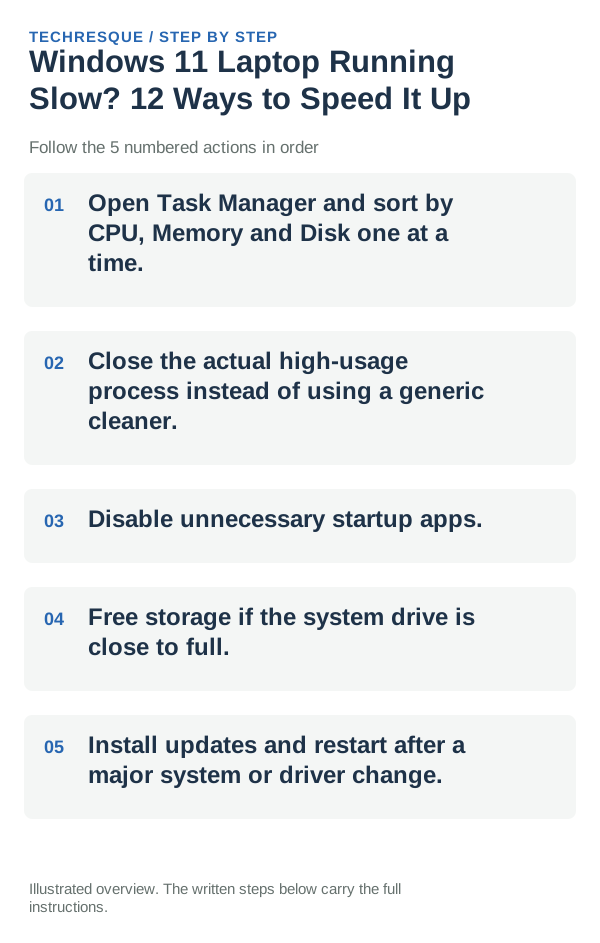
- Open Task Manager and sort by CPU, Memory and Disk one at a time.
- Close the actual high-usage process instead of using a generic cleaner.
- Disable unnecessary startup apps.
- Free storage if the system drive is close to full.
- Install updates and restart after a major system or driver change.
How to tell which cause applies
After a restart, repeat the same sign-in, file, and app task; note whether the delay occurs before the desktop loads or only in one workload.
Do not make troubleshooting harder
Verify before you move on
Measure idle usage and the same workload before and after the change; “feels faster” is less useful than a repeatable difference.
When to use support or repair
If the slowdown persists after startup and storage checks, note whether it affects sign-in, file access, or one app, along with Task Manager’s top resource users and the Windows build. Give those observations and the laptop model to the app publisher or PC maker before using a reset that could remove files.
Frequently asked questions
Should I reset the whole device immediately?
Usually not. Try the guide’s reversible checks first and confirm whether the problem is limited to one app, file, device, or Windows component. Back up important files before considering Reset this PC.
How do I know when the fix is real?
Measure idle usage and the same workload before and after the change; “feels faster” is less useful than a repeatable difference.
Official sources and further reading
Windows Settings paths can shift between releases. Search for the named control and note your Windows build if an option is missing.