On a laptop, check the display driver and whether Windows recognizes the internal panel. On a desktop using an external monitor, brightness is often controlled by the monitor itself rather than the Windows slider.
On Windows 11, menu names vary by build. Use built-in Settings and Microsoft Support guidance before registry edits or third-party repair tools.
What this symptom usually means
- the graphics/monitor driver is missing
- the device is an external monitor
- a display service is not exposing brightness control
- the laptop panel driver is disabled
The practical troubleshooting sequence
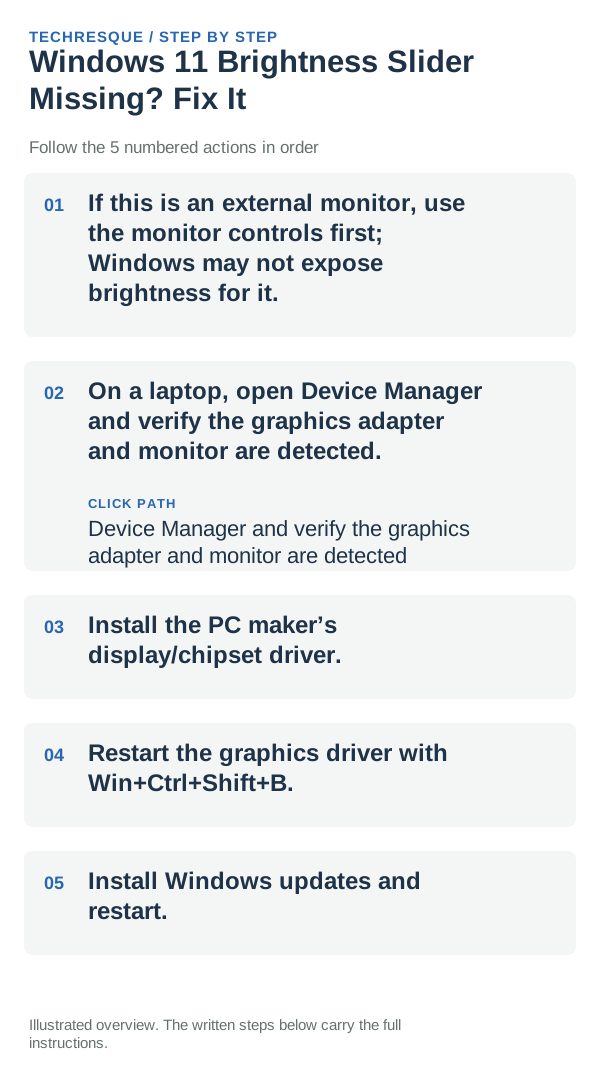
- If this is an external monitor, use the monitor controls first; Windows may not expose brightness for it.
- On a laptop, open Device Manager and verify the graphics adapter and monitor are detected.
- Install the PC maker’s display/chipset driver.
- Restart the graphics driver with Win+Ctrl+Shift+B.
- Install Windows updates and restart.
What each result tells you
If windows 11 brightness slider missing works with another cable or monitor, the original cable/display path is the likely cause. If the same known-good display fails only on this PC, focus on Windows display mode, the graphics driver and the physical output port.
On the laptop’s built-in display, reopen Display settings and verify the brightness slider changes the panel; external monitors may use their own controls instead.
Changes to avoid until you know the cause
- Do not install random display utilities before testing the cable and input.
- Do not assume “No signal” means the GPU is dead; a wrong monitor input can look identical.
- Do not change several resolution/refresh settings at once.
- Avoid troubleshooting through a dock until a direct cable test works.
Confirm that the problem is actually gone
A direct connection with a known-good cable and display is the cleanest A/B test for the PC versus the accessory chain.
When to use support or repair
If a known-good monitor and cable still produce no output from the same physical port, check the PC maker’s diagnostics or repair options. If the display works during firmware/boot but disappears only in Windows, software/driver troubleshooting is more likely to help.
Record Windows build, affected app, exact error code and whether it repeats in another account or built-in app. Keep recovery keys private.
A two-minute display sanity check
Power the monitor, select the correct input, connect one direct known-good cable, then press Windows + P. If that exact setup works, reintroduce docks/adapters one at a time.
Frequently asked questions
What should I check first for windows 11 brightness slider missing? fix it?
On a laptop, check the display driver and whether Windows recognizes the internal panel. On a desktop using an external monitor, brightness is often controlled by the monitor itself rather than the Windows slider.
Should I reset the whole device immediately?
Usually not. Try the guide’s reversible checks first and confirm whether the problem is limited to one app, file, device, or Windows component. Back up important files before considering Reset this PC.
How do I know when the fix is real?
A direct connection with a known-good cable and display is the cleanest A/B test for the PC versus the accessory chain.
Official sources and further reading
Windows Settings paths can shift between releases. Search for the named control and note your Windows build if an option is missing.