
Very full storage can contribute to slowdowns because the system has less room for updates, caches and temporary files. It is not the only cause of a slow phone, but leaving some free space is useful for stability.
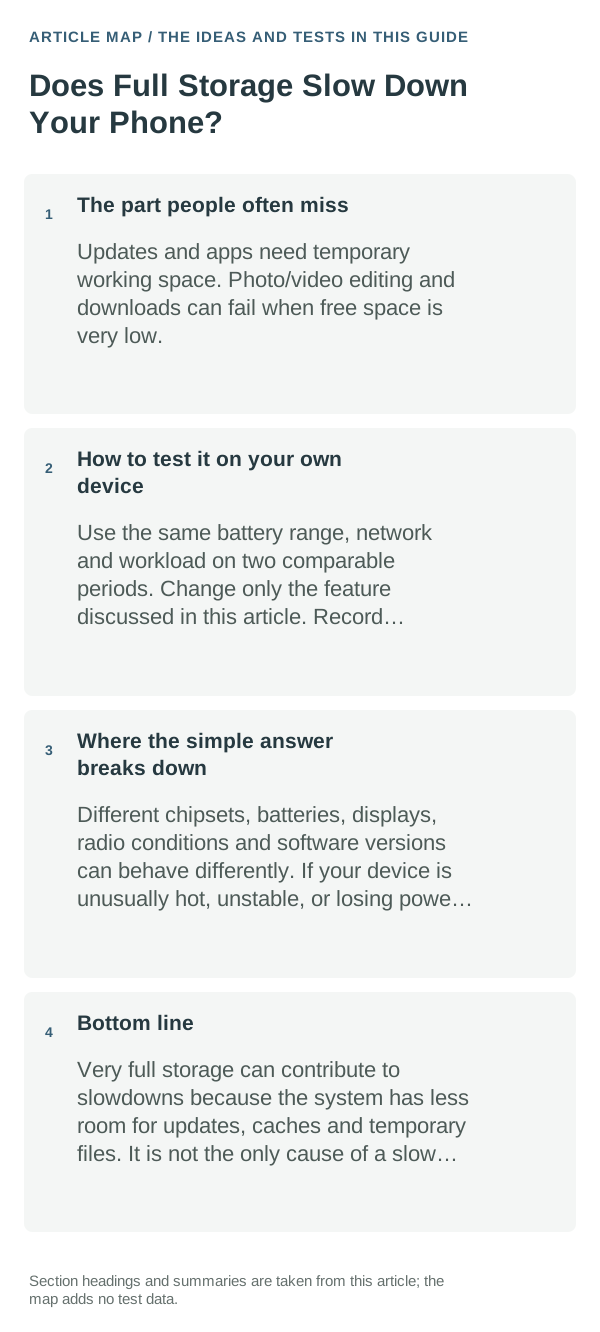
The part people often miss
Updates and apps need temporary working space. Photo/video editing and downloads can fail when free space is very low.
- Storage pressure can coincide with large app caches and background cleanup.
- CPU/RAM limits still matter even when storage is healthy.
A practical way to use this
- Free space from the largest safe categories first.
- Keep a verified backup before deleting personal files.
- Restart after a major cleanup.
- Use battery/CPU/app diagnostics too if the device is still slow with adequate free space.
How to test it on your own device
Use the same battery range, network and workload on two comparable periods. Change only the feature discussed in this article. Record screen-on time, idle drain or the specific behavior you care about. One controlled comparison is more useful than several settings changed together.
Where the simple answer breaks down
Different chipsets, batteries, displays, radio conditions and software versions can behave differently. If your device is unusually hot, unstable, or losing power rapidly while idle, troubleshoot that underlying problem instead of treating full storage slow down your phone as the sole cause.
Bottom line
Very full storage can contribute to slowdowns because the system has less room for updates, caches and temporary files. It is not the only cause of a slow phone, but leaving some free space is useful for stability.
Use built-in battery/performance information when possible. It shows what is actually consuming power or resources on your device and keeps the decision grounded in your real usage.
Know whether the problem is local storage, cloud state or sync
Local free space and cloud quota are separate limits. A device can have plenty of storage while a cloud account is full, or the cloud can have room while the phone is too full to create temporary files for an upload.
Sync is not the same as backup. Confirm which account is active, whether the item exists locally, and whether the service reports it as uploaded before deleting the original copy.
When a transfer is stuck, test one small file first. A small successful upload points away from authentication and toward file size, format, naming or network stability.
| What you observe | What it points to | Best next check |
|---|---|---|
| Small files sync, large files do not | Size, timeout or connection stability | Test a smaller sample and another network |
| Account says full | Cloud quota or retained items | Check service storage breakdown |
| File exists locally but not online | Sync paused, account mismatch or upload failure | Verify active account and sync status |
Frequently asked questions
Is there one rule that applies to every phone?
No. Hardware, software, temperature, signal and workload can change the result.
What is the best way to test this?
Compare two similar periods while changing only one setting or behavior.
Should I install an optimizer app?
Usually not as a first step. Built-in battery and performance tools give cleaner evidence and avoid adding another background process.
Official sources and further reading
Repeat the same action after one change, and note the result.